Plumbing Bros x AIIMS Case Study | Website, SEO & Google Ads Growth
Case Study / Plumbing Bros x AIIMS
From invisible to unstoppable.
A full digital rebuild for Plumbing Bros — new website, SEO foundation, Google Ads, Performance Max, conversion-led landing pages and call tracking that proved where the bookings came from.
Plumbing Bros did not need another pretty website. They needed a digital system that could convert urgent plumbing intent into calls, leads and booked jobs. That is what AIIMS built.
AIIMS rebuilt Plumbing Bros’ digital presence from the ground up. The work covered the website, Google Ads, Performance Max, SEO structure, creative, landing pages and call tracking.
The goal was simple: generate measurable enquiries and bookings, not vanity traffic. Every piece of the campaign was built around search intent, conversion behaviour and source attribution.
584Total Clicks
76Conversions
114Inbound Calls
63Qualified Leads
24Bookings Made
0Missed Calls
The Challenge
The old setup was not pulling its weight.
Plumbing Bros had previously invested in digital marketing, but the campaign structure, website experience and reporting visibility were not strong enough to consistently hit lead and booking targets. The brand needed a sharper online presence, better landing page logic and a cleaner way to see which channels were creating real calls.
The Strategy
Build the machine first. Then scale the traffic.
AIIMS focused on the core foundations that matter for trade lead generation: speed, trust, location intent, call visibility and campaign accountability.
01
Conversion Website
A stronger website structure designed to make Plumbing Bros look like a serious national plumbing franchise, not a generic local trade page.
02
Google Ads Rebuild
Search campaigns were rebuilt around high-intent plumbing searches, locations, service urgency and clear conversion actions.
03
Performance Max Layer
Performance Max was used to support broader reach and conversion capture while search campaigns handled direct intent.
04
Location Pages
State, region and suburb-level pages helped connect users with localised plumbing intent and supported SEO growth.
05
Call Tracking
WildJar tracking created visibility across paid, organic, direct and location-based phone enquiries.
06
Creative Proof
Photography, video and design assets helped the brand look established, credible and trustworthy across every touchpoint.
Website Transformation
From generic to franchise-ready.
The new website repositioned Plumbing Bros around trust, urgency, national coverage and practical service navigation.
The campaign mix included main search coverage, geo-specific campaigns and Performance Max support.
Plumbing Bros — MAIN
3,836Impressions
179Clicks
13Conversions
$2,775Spend
CTR 4.67%Top Performer
Central Coast & Newcastle
3,357Impressions
127Clicks
8Conversions
$1,750Spend
CTR 3.78%CPC $13.78
Plumbing Bros — Perth
3,160Impressions
134Clicks
11Conversions
$1,740Spend
CTR 4.24%CPC $12.98
Performance Max
1,498Impressions
144Clicks
44Conversions
$213Spend
CTR 9.61%Highest CTR
WildJar Call Tracking
The phone data backed up the campaign.
Call tracking gave Plumbing Bros a cleaner view of business outcomes, not just clicks. It connected call volume, answer rates, lead quality and bookings back to marketing sources.
114Total Calls
114Answered
0Missed
63Qualified Leads
24Bookings
85New Callers
“Google Ads campaigns live and have already exceeded their monthly lead and booking targets.”
Plumbing Bros client update
The Work
What AIIMS built.
01
New Website
Full rebuild with stronger positioning, service navigation, conversion pathways and franchise credibility.
02
Google Ads
Search and Performance Max campaigns structured around intent, geography and booking action.
03
SEO Foundation
Technical and on-page improvements, stronger service structure and location content to support organic growth.
04
Call Tracking
WildJar integration to measure which channels drove real inbound calls and bookings.
05
Creative Assets
Photo, video and graphics to give the brand a sharper, more trustworthy presence across web and ads.
06
Landing Pages
Location and service-focused pages built to convert urgent plumbing enquiries into phone calls.
Within weeks of launch, Plumbing Bros had a stronger brand presence, better conversion pathways, clearer campaign structure and reporting that connected marketing activity to real phone enquiries and bookings. The result was not just more traffic. It was a system the business could actually measure and improve.
FAQ
Questions this case study answers.
What did AIIMS Group do for Plumbing Bros?
AIIMS delivered a full digital rebuild including website design and development, SEO, Google Ads, Performance Max, location landing pages, conversion optimisation, creative assets and WildJar call tracking.
What were the key results?
The reporting period used in the case study recorded 584 clicks, 76 conversions, 114 inbound calls, 63 qualified leads, 24 bookings and zero missed calls.
Why does this matter for other trade businesses?
It proves that a trade business does not win online by running ads alone. The website, landing pages, SEO, creative, tracking and sales follow-up all need to work together.
Need your marketing to prove itself?
AIIMS Group builds performance-led websites, SEO systems and paid media campaigns for businesses that want measurable growth, not excuses.
ChatGPT Ads Are Here. We Are the Authorised Reseller for Australia & the UAE.
The most significant new paid media channel since Google Shopping. AIIMS Group now offers direct, supported access to ChatGPT Ads for businesses across Australia and the UAE.
On 16 January 2026, OpenAI announced it was testing paid advertising inside ChatGPT. By 9 February 2026, the ads were live. Within weeks the platform expanded into the UK, Mexico, Brazil, Japan and South Korea. The search industry spent a decade watching Google dominate. The AI advertising era just started, and it is moving considerably faster.
AIIMS Group is now an authorised reseller of ChatGPT Ads for businesses in Australia and the UAE. That means our clients have direct, supported access to the most significant new paid media channel since Google Shopping launched.
This post covers what ChatGPT Ads actually are, why GEO (Generative Engine Optimisation) is the new SEO, what Agentic Ecommerce Advertising means for your store, and how Natural AI Discovery works. If you sell anything online or run any form of paid media, read this carefully.
What Are ChatGPT Ads?
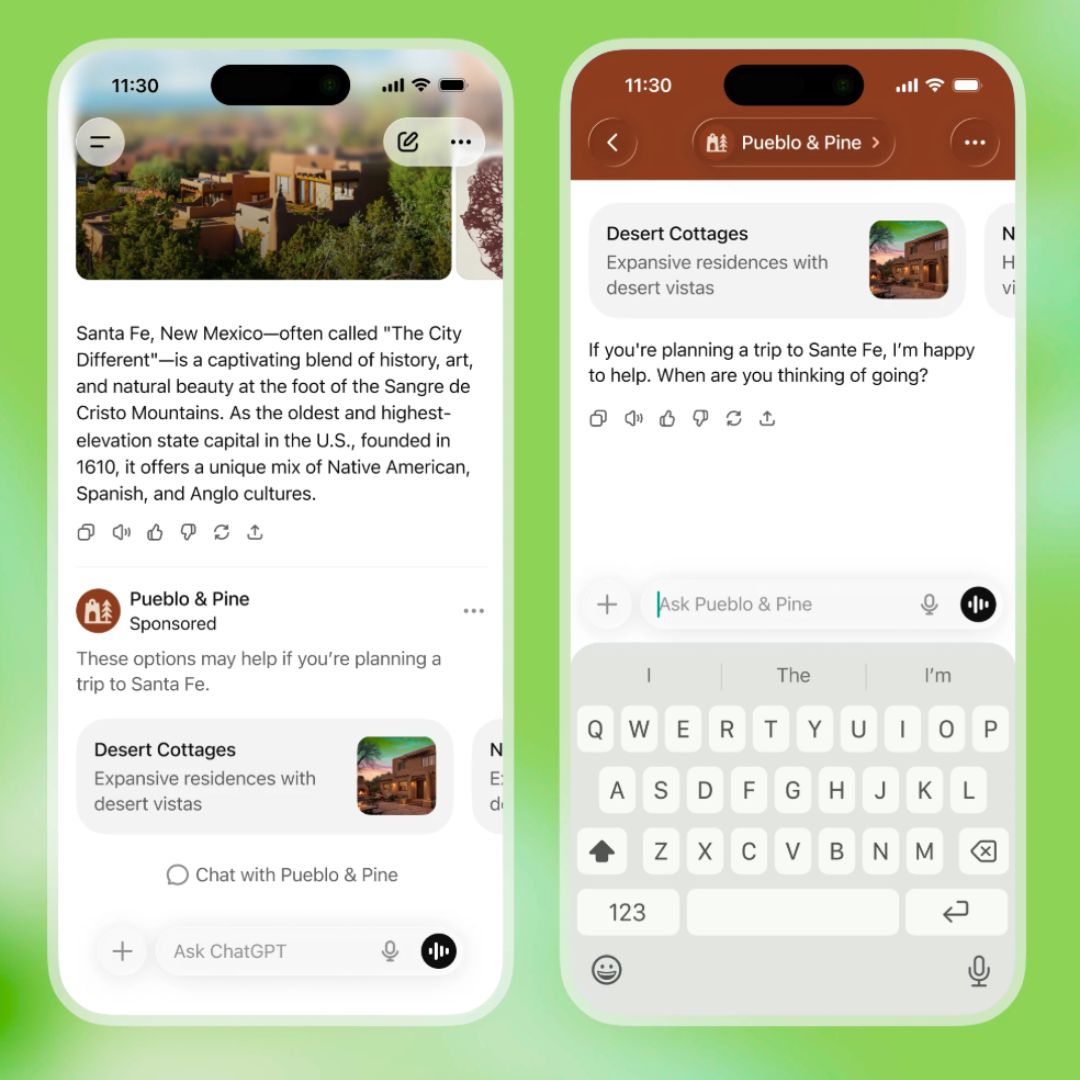
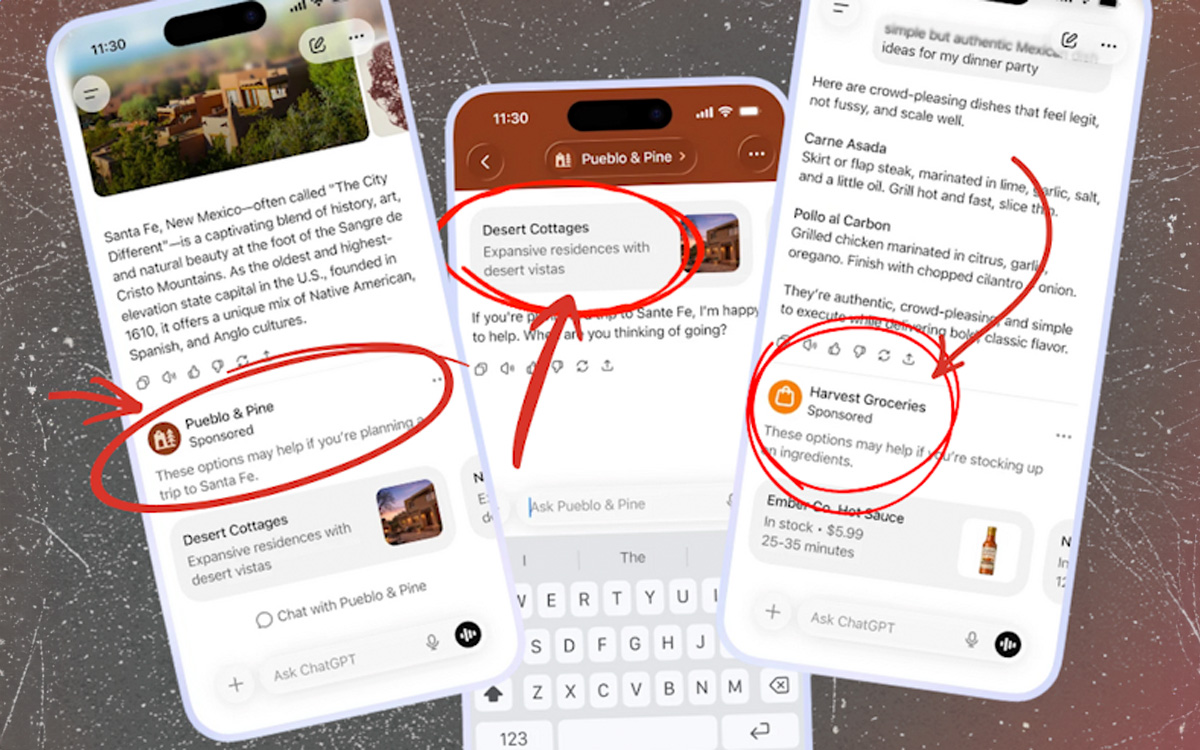
How sponsored ad cards appear inside ChatGPT conversations. Source: OpenAI, February 2026.
ChatGPT now has nearly one billion weekly active users. That number grew 700% between June 2024 and July 2025 alone, and it is no longer primarily a work tool. People are using ChatGPT to research purchases, compare products, plan travel, find services and make buying decisions. That behaviour is exactly what advertising was built for.
OpenAI’s ad format works differently from anything that came before it. When a user on the Free or Go tier asks ChatGPT a question relevant to a product or service, a clearly labelled sponsored card appears alongside the organic answer. The card includes the advertiser’s name, a headline, a short description, an image and a destination link. OpenAI is explicit: ads do not influence the answer ChatGPT gives. The response is always generated based on what is most helpful to the user. The ad sits separately.
Targeting is contextual. OpenAI matches ads to the topic of the conversation, the user’s general location and language, and past interactions with ads. Advertisers do not receive personal data, chat transcripts or user identities. It is intent-based advertising at scale, without the privacy concerns that have plagued social platforms for years.
The numbers that matter
$26B
Projected US AI ad spend by 2029, up from $1.1B in 2025
$60 CPM
Premium ChatGPT placement price, comparable to top-tier programmatic
58%
Of adults under 30 use ChatGPT consumer plans regularly
This is not a future opportunity. It is a live channel, and the brands that move early will build data, learnings and audience familiarity that compounds as the platform scales.
GEO: The SEO of AI Engines
For thirty years, SEO meant optimising for Google’s crawlers. You targeted keywords, built backlinks, structured your pages correctly, and Google rewarded you with rankings. That model is not dead, but it is no longer the whole game.
When someone asks ChatGPT, Perplexity, Gemini or any AI engine a question, those platforms do not return a list of ten blue links. They generate a single, synthesised answer. Your brand either appears in that answer or it does not. There is no page two. There is no position four. You are either cited or you are invisible.
Generative Engine Optimisation (GEO) is the discipline of making sure AI engines understand, trust and surface your brand. It is built on pillars that differ meaningfully from traditional SEO:
Entity clarity. AI engines build understanding around entities: your brand, your products, your people, your category. Structured data, consistent naming and clear topical authority help AI engines map who you are.
Citation-worthy content. AI engines pull from sources they consider authoritative. Long-form, accurate, well-referenced content earns citations. Thin pages do not.
Conversational alignment. People ask AI engines questions in natural language. Your content needs to answer those questions directly, not just rank for keyword variants.
Brand consistency across the web. AI engines aggregate signals from your website, press coverage, reviews, social presence and third-party mentions. A fragmented brand story produces fragmented AI outputs.
Technical accessibility. OpenAI’s crawler (OAI-SearchBot), Perplexity’s crawler and Gemini’s indexing systems all need clean access to your content. Blocking them in robots.txt effectively removes you from AI-generated answers.
AIIMS Group has been building GEO into our service offering since before most agencies knew what to call it. Our GEO services are purpose-built for this era of search.
Agentic Ecommerce Advertising: The Biggest Shift in Online Retail
ChatGPT’s Agentic Commerce Protocol enables product discovery, comparison and purchase directly inside a conversation.
Paid ads inside ChatGPT are significant. But they are only one layer of what is happening in AI-driven commerce. The deeper shift is agentic ecommerce, and it changes how products are discovered, compared and purchased at a structural level.
An agentic commerce experience works like this: a user asks ChatGPT to help them find a product. The AI does not just return search results. It searches merchant feeds, compares options, filters by the user’s preferences, and surfaces specific products with a direct path to purchase, all within the conversation. The user never visits a website. The AI acts as their personal shopper.
OpenAI calls this the Agentic Commerce Protocol (ACP). Shopify has already activated it by default for millions of eligible merchants. Walmart launched an in-ChatGPT app experience supporting account linking and loyalty programs. Etsy was the first merchant partner for ChatGPT Instant Checkout.
38%
Shoppers from AI discovery are more likely to buy vs traditional search
$20.9B
eMarketer projects AI platforms will drive this in retail spend in 2026
194%
More likely to purchase: Microsoft Copilot users with shopping intent
For ecommerce brands, the question is no longer whether to engage with agentic advertising. It is how quickly you can get your product catalogue, data feeds and brand story into a position where AI agents surface you first.
Our team has been working with Shopify merchants on exactly this. Read our guide to Shopify Agentic Sales Channels in Australia to understand how the channel works at a product level.
Natural AI Discovery: Being Found Without Paying for It
Natural AI Discovery: brands that appear in AI-generated answers without paid placement earn the highest trust signals from users.
Not every touchpoint in the AI era is a paid placement. Natural AI Discovery is the organic side of the equation, and in many ways it is the more durable one.
When an AI engine recommends your brand unprompted, without advertising spend behind it, that recommendation carries weight that no paid ad can replicate. Users trust AI-generated answers because they perceive the AI as impartial. A natural recommendation from ChatGPT functions more like a referral than an advertisement.
Achieving consistent natural discovery requires a combination of GEO, brand authority building, structured data implementation and content strategy aligned to how AI engines reason about your category:
Be the best answer, not just the most optimised page. AI engines read your content and judge whether it genuinely answers the question. Depth, accuracy and original perspective matter more than keyword density.
Earn mentions from authoritative sources. Coverage in industry publications, partnerships with recognised brands and verified business profiles all strengthen your entity authority.
Keep your information consistent and current. AI engines can surface outdated information. Your pricing, services, locations and contact details need to match across every platform they can access.
Participate in the protocols. For ecommerce, being discoverable through OpenAI’s ACP and Google’s UCP gives AI agents the structured product data they need to recommend you accurately.
Build memory signals. ChatGPT with memory enabled can recall a brand that impressed a user previously. Positive brand experiences compound into preferential AI recommendations over time.
Natural AI Discovery is not a one-off tactic. It runs as an ongoing programme in parallel with paid activity. Brands that invest in both will dominate their categories in AI-generated answers. Brands that invest in only one will be outmanoeuvred by those who understand the full picture.
Why This Matters for Australian and UAE Brands Right Now
OpenAI’s initial rollout was limited to US advertisers. The platform is expanding rapidly, and Australia and the UAE are active markets with high ChatGPT adoption and sophisticated digital advertising ecosystems. The brands that build AI advertising capability now, before the channel becomes saturated in this region, will hold a structural advantage over those that wait.
As an authorised reseller, AIIMS Group gives clients in both markets:
Direct, supported access to ChatGPT Ads through OpenAI’s advertising infrastructure
Campaign strategy built specifically for conversational contexts, not repurposed from Google or Meta frameworks
GEO strategy running in parallel to maximise both paid and organic AI visibility
Agentic commerce setup for ecommerce clients, including Shopify ACP configuration and product feed optimisation
Measurement and attribution frameworks designed for AI-native channels where last-click models do not apply
The Channel Is Open. The Question Is Who Moves First.
Every major advertising channel in history rewarded early movers. The brands that built Google Ads accounts in 2003 paid a fraction of what those keywords cost today. The brands that ran Facebook Ads in 2012 built audiences for almost nothing. The brands that move on ChatGPT Ads now are in that same position.
The difference this time is that the channel is not just for brand awareness or top-of-funnel traffic. Through agentic commerce, it reaches all the way to purchase. A user can discover your product, compare it to competitors, and buy it without ever leaving the conversation. That is a compressed sales funnel unlike anything that has existed before.
If you operate in Australia or the UAE and want to understand what ChatGPT Ads, GEO and Agentic Ecommerce Advertising mean for your business specifically, talk to our team. We are already running this for clients and the results are early but compelling.
Ready to advertise on ChatGPT?
AIIMS Group is Australia and the UAE’s authorised reseller for ChatGPT Ads. Talk to our team about getting your brand into the conversation.
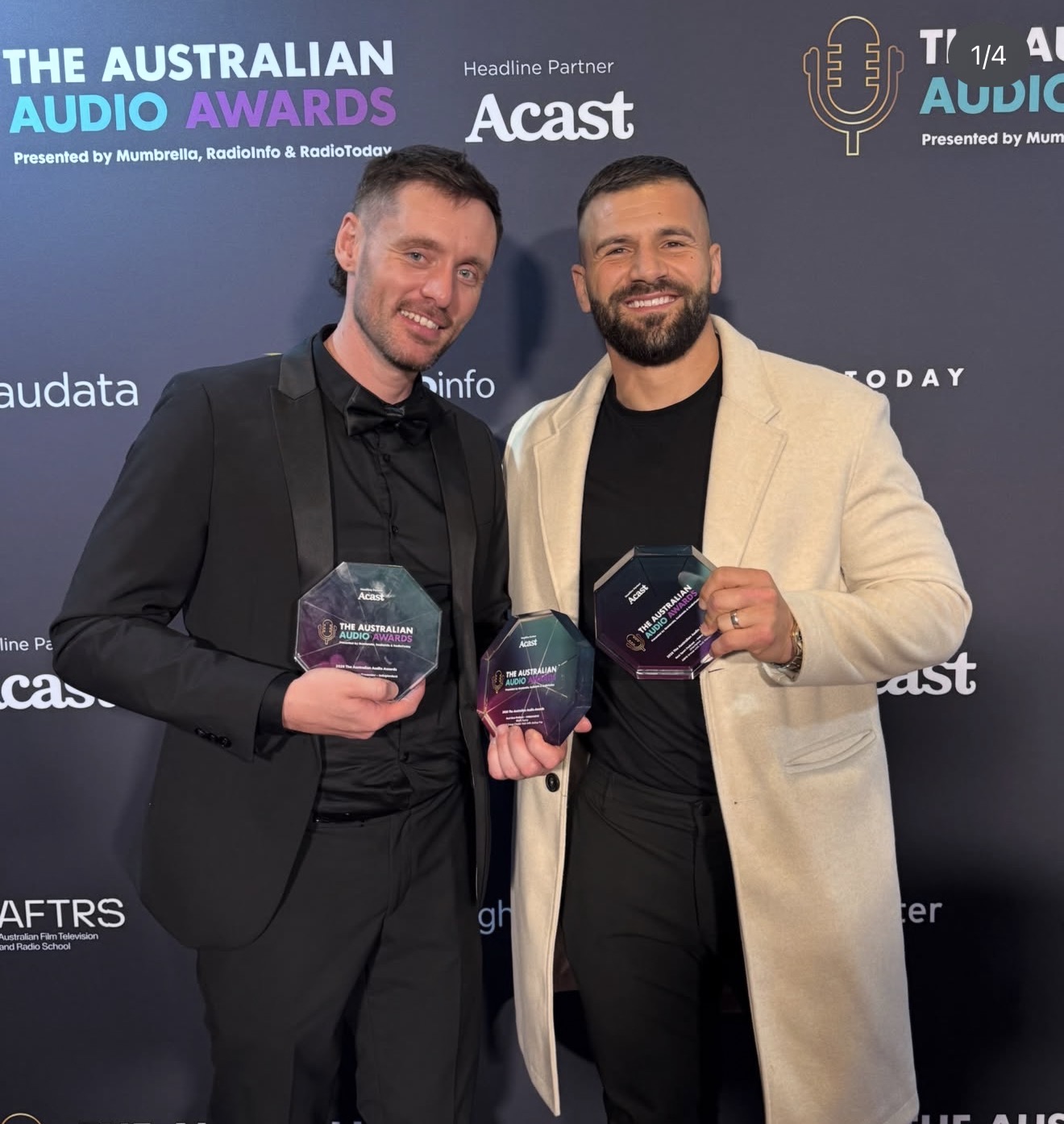
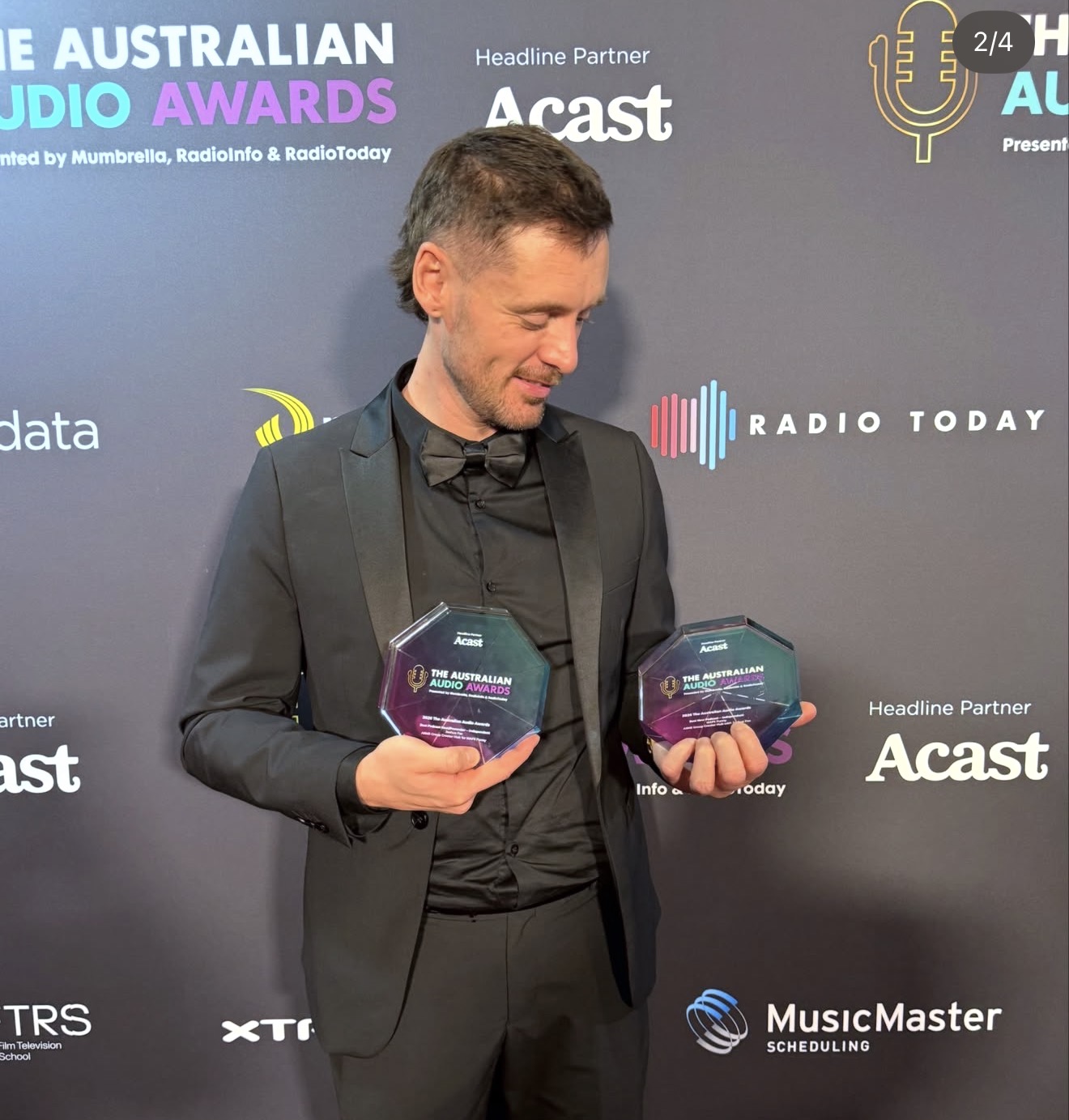
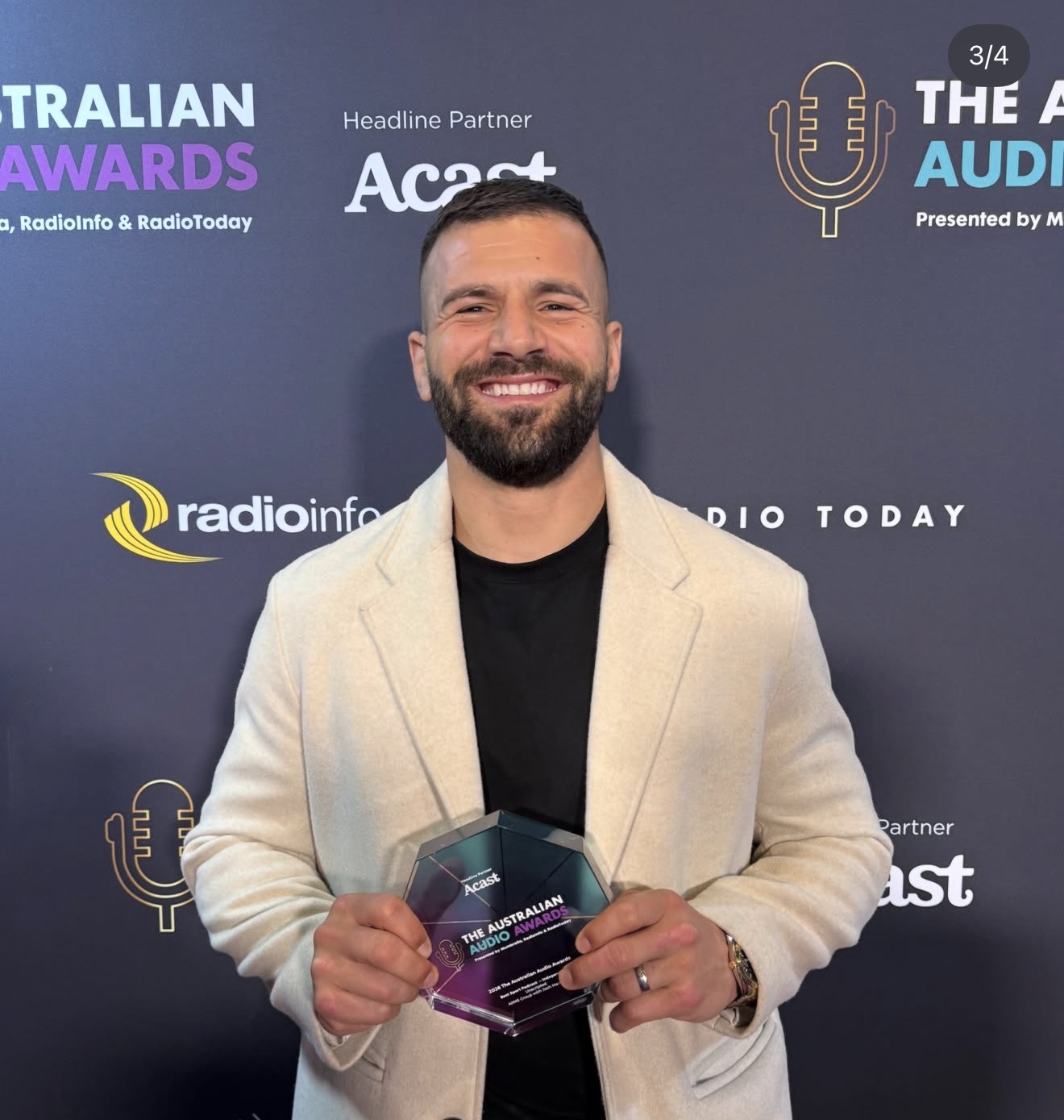
AIIMS Creator Hub has dominated the Australian Audio Awards, taking out three major awards in a single night, cementing our position as one of Australia’s leading podcast and creator networks. Visit AIIMS Creator Hub to learn more about what we do.
AIIMS Creator Hub
Ready to make noise?
Book a session at AIIMS Creator Hub — studio, strategy, and a team that’s built for creators serious about growing.
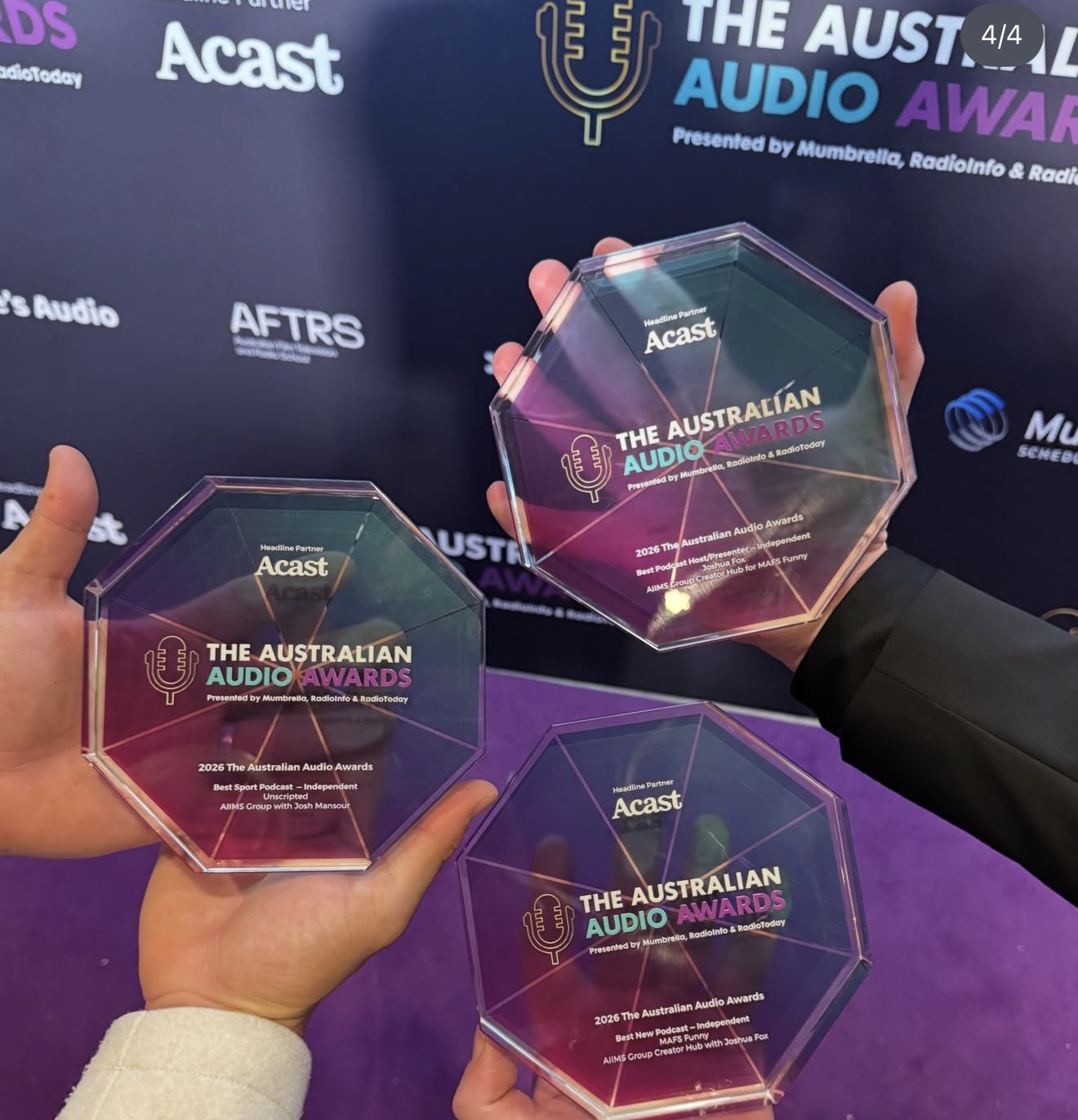
Three categories. Three wins. This is a testament to the incredible talent, hard work, and vision behind every show produced at AIIMS Creator Hub.
What This Means for AIIMS Creator Hub
AIIMS Creator Hub was built on the belief that world-class content deserves world-class support. From strategy and production through to distribution and audience growth, our team works closely with creators to bring their vision to life, and tonight’s results reflect exactly that.
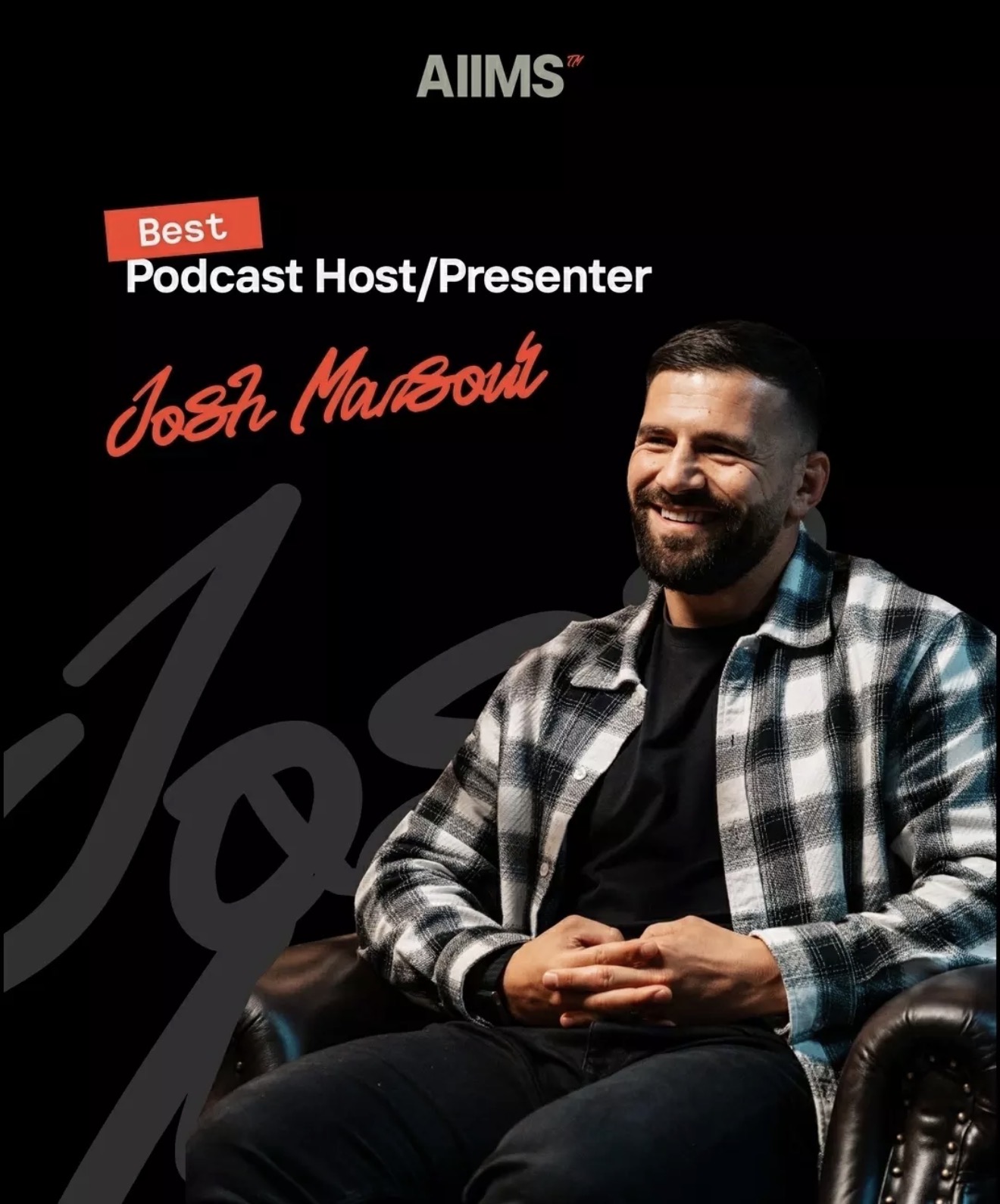
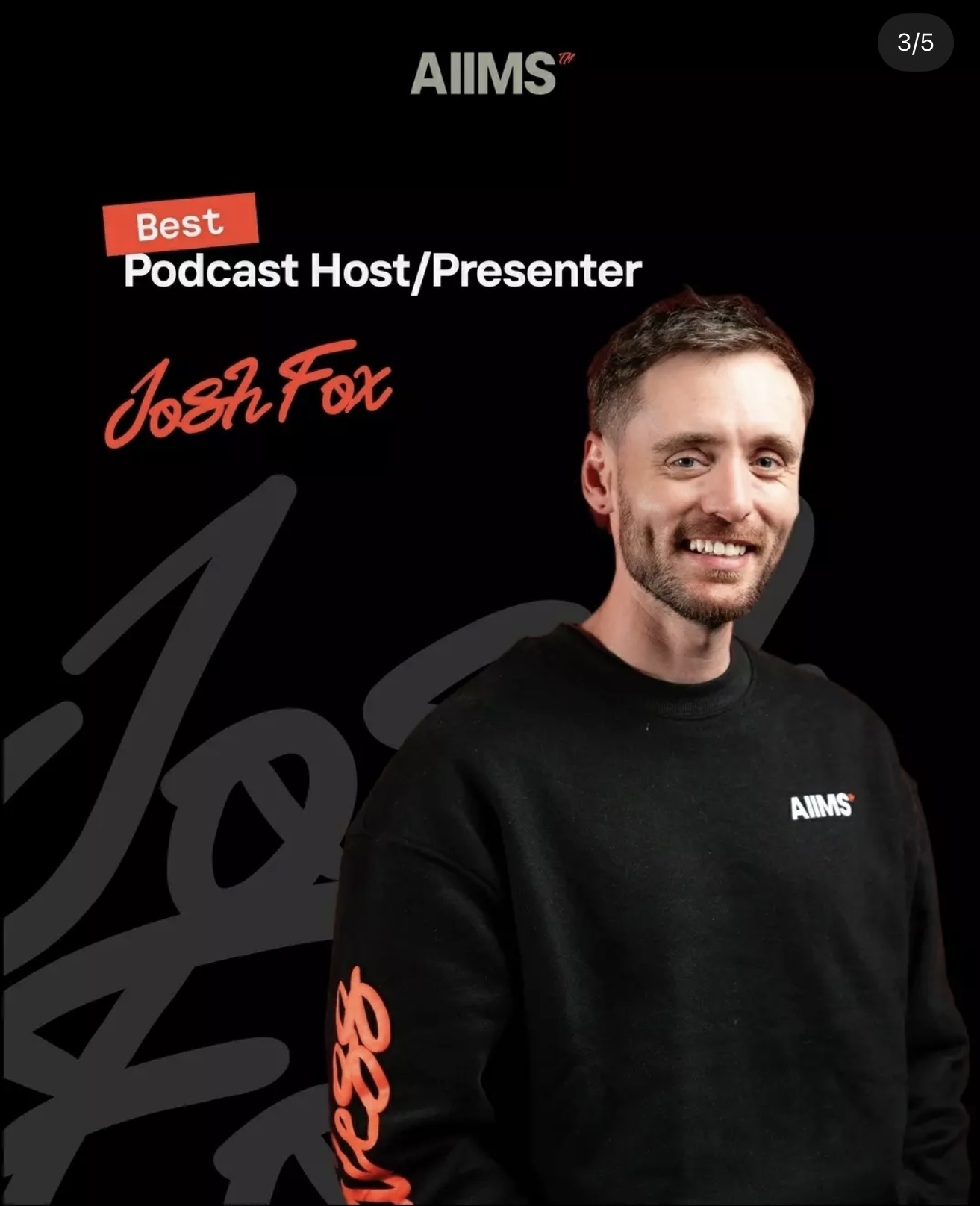
Winning Best Podcast Host/Presenter for Josh Fox recognises the incredible connection and energy he brings to every episode. The Best Sport Podcast win for Unscripted with Josh Mansour acknowledges a show that has broken through in one of the most competitive content categories in the country. And Best New Podcast for MAFS Funny shows that new voices and bold ideas have a real home at AIIMS Creator Hub.
Awards Night Gallery
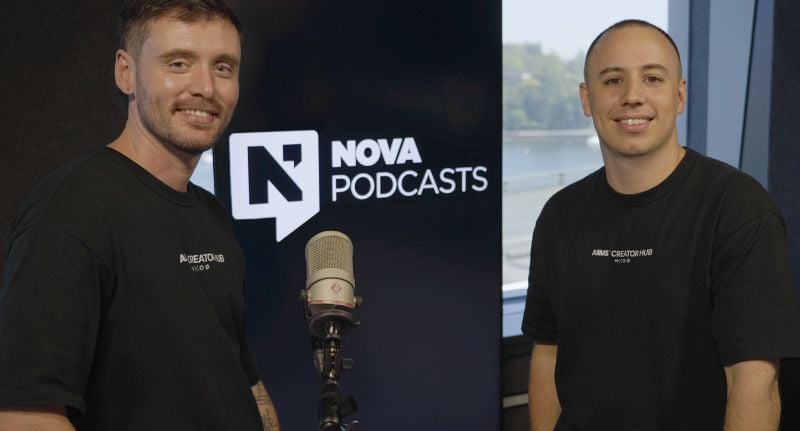
Josh Fox & Josh Mansour — three trophies, one incredible night
Josh Fox with his awards on the night
Josh Mansour — Best Sport Podcast winner
Three awards. Best Sport Podcast, Best Podcast Host, Best New Podcast
Josh Mansour — Best Podcast Host/Presenter
Josh Fox — Best Podcast Host/Presenter
Congratulations to the Entire Team
Awards like these are never won by one person. They are the result of producers, editors, strategists, and creators all pulling in the same direction. A massive congratulations to every person who played a part in making these shows what they are.
The best is still ahead. Watch this space.
AIIMS Creator Hub
Ready to make noise?
Book a session at AIIMS Creator Hub — studio, strategy, and a team built for creators serious about growing their presence.
AIIMS Group | Proven Digital Marketing & SEO Agency Australia
Established 2010 · Sydney · Dubai
AIIMS Group is built for brands that want to be seen, trusted and chosen.
A performance-led creative digital agency combining SEO, Google Ads, social media, web design, branding, content production and commercial strategy under one roof.
A serious digital agency for businesses that are done playing small.
AIIMS Group was founded in Sydney in 2010 and has grown into a full-service digital marketing agency with an international operating footprint. The agency exists for one reason: to help ambitious businesses turn attention into measurable growth.
We are not here to make marketing look busy. We are here to make it perform.
Too many businesses are sold activity: posts, reports, meetings, dashboards and vague promises. AIIMS Group is built around commercial output: enquiries, calls, bookings, leads, sales, ranking growth, conversion rate and brand authority.
The difference is simple. Strategy, creative, media, content and web are not treated as separate jobs. They work together as one system.
Performance firstCampaigns are judged by business outcomes, not vanity metrics.
Specialist-led executionSEO specialists, paid media specialists, designers, developers and creatives working directly on the work.
Built for speedFast-moving businesses need fast-moving marketing without unnecessary layers.
Australian roots, global perspectiveSydney foundations with Dubai expansion and international market thinking.
The AIIMS Method
HALO marketing: every channel working toward the same commercial outcome.
SEO cannot sit in one corner while ads, social, web and creative sit somewhere else. The strongest brands win because every touchpoint reinforces the next one.
01
Search Visibility
SEO, local SEO, AI Overview-ready content and technical foundations built around intent.
02
Paid Demand
Google Ads, Performance Max, Meta, TikTok and LinkedIn campaigns structured for measurable outcomes.
03
Conversion Assets
Websites, landing pages, forms, call tracking and CRO paths that reduce wasted traffic.
04
Brand Authority
Brand identity, design systems, review strategy, thought leadership and market positioning.
05
Content Production
Video, photography, reels, social assets, podcast production and editorial content.
06
Commercial Reporting
Clear reporting around leads, calls, revenue impact, conversion rate and next actions.
Proof Points
A brand page should not just say “we are different”. It should prove it.
Use this section to showcase real screenshots, campaign wins, testimonials, rankings, award mentions and commercial outcomes. Google and users both need evidence, not empty claims.
Trade Services$5M+
Attributed revenue from campaign activity
Use this card for your strongest plumbing, trade or lead generation case study. Add a screenshot, client quote and source of truth.
eCommerce$315K+
Revenue growth through paid social and product positioning
Position the win around category creation, creative testing, ROAS improvement and reduced acquisition cost.
Organic Social2M+
Organic views from one high-performing reel
Show the creative strategy behind the result, not just the result itself. That is what makes the proof believable.
Creator Hub#1
Podcast and creator-led growth capability
Use this to explain AIIMS Creator Hub, podcast production, media strategy and the difference between content and attention.
What We Do
One agency. The core services serious growth needs.
SEO
Technical SEO, local SEO, content strategy, suburb pages, authority building and AI Overview-focused structure.
Google Ads
Search, Shopping, Performance Max, YouTube and lead generation campaigns managed for commercial return.
Paid Social
Meta, TikTok and LinkedIn campaigns with creative testing, funnel structure and retargeting strategy.
Video, photography, reels, podcast production, social content and editorial assets built to support demand.
Why Choose AIIMS Group
The agency model is crowded. Your difference needs to be obvious.
What matters
AIIMS Group approach
Common agency problem
Strategy
Commercial strategy tied to growth goals
Channel-by-channel activity with no bigger picture
SEO
Built around intent, local authority, content depth and conversion paths
Keyword reports without enough business impact
Speed
Specialist-led work designed to move faster
Too many hand-offs and slow approval cycles
Creative
Brand, content, video and campaign creative connected to media
Creative assets made separately from performance strategy
Reporting
Leads, calls, enquiries, conversion rate and commercial next steps
Clicks, impressions and screenshots without direction
Client Trust
Reviews, case studies and proof should sit on the page — not hidden away.
For strongest SEO and conversion impact, place real review snippets, names where approved, industry, location, star rating source and screenshots close to the relevant service or case study.
Review Proof
Insert a verified client review about communication, results and business growth.
Ranking Proof
Add screenshots of ranking improvements, local pack wins and organic traffic growth.
Revenue Proof
Add call tracking, lead data, ecommerce revenue or conversion screenshots where possible.
FAQ
Questions people ask before choosing AIIMS Group.
What is AIIMS Group?
AIIMS Group is a full-service digital marketing agency founded in Sydney, helping businesses grow through SEO, Google Ads, social media, web design, branding, content production and performance strategy.
Is AIIMS Group an SEO agency?
Yes. SEO is one of the core services, supported by technical SEO, local SEO, content strategy, authority building, website improvements and conversion-focused reporting.
Does AIIMS Group only work with Australian businesses?
No. AIIMS Group has Australian roots and also operates with a Dubai presence, supporting both Australian and international business growth.
What makes AIIMS Group different?
The difference is the connected model: SEO, ads, social, creative, web and reporting working together toward commercial outcomes instead of disconnected channel activity.
Ready to build a brand that ranks, converts and gets remembered?
Talk to AIIMS Group about SEO, paid media, web, social, branding and content built around real business growth.
What the 2026-27 Australian Federal Budget Means for Your Digital Marketing
The Treasurer made the $20,000 instant asset write-off permanent, brought back loss carry-back, and put a 30% minimum tax on discretionary trust distributions. Here is what every Australian business owner needs to know about funding — and proving — marketing under the new rules, before 30 June.
James Baker · CEO, AIIMS Group · 8 min read
TL;DR
The 2026-27 Federal Budget did not introduce a tax on digital advertising. It changed six things that genuinely affect Australian marketing budgets: a permanent $20,000 instant asset write-off from 1 July 2026, permanent loss carry-back for companies up to $1bn turnover, start-up loss refundability from 2028-29, opt-in monthly PAYG from 1 July 2027, an R&D Tax Incentive overhaul, and a 30% minimum tax on discretionary trust distributions from 1 July 2028 that hits a lot of independent agencies. The smartest move before 30 June is to audit which parts of your marketing stack are now immediately deductible — and to tighten attribution so every post-1 July dollar you spend can be measured.
What did the 2026-27 Budget actually change for marketers?
There is no new advertising tax. There are six tax and cash-flow levers that decide whether your next campaign is easier or harder to fund.
Treasurer Jim Chalmers handed down the 2026-27 Federal Budget on Tuesday 12 May 2026. Most measures still need to pass Parliament before they are law, so treat the dates below as the Government’s stated start dates, not guarantees. The six items below are the ones we keep getting asked about by AIIMS clients:
Measure 01
Permanent $20,000 instant asset write-off
From 1 July 2026, businesses with aggregated turnover under $10m can immediately deduct eligible depreciating assets costing less than $20,000 each. No more 30 June cliff.
Measure 02
Permanent loss carry-back
From 2026-27, companies with turnover up to $1bn can carry tax losses back against tax paid in the prior two years and claim a refund (capped by franking account balance).
Measure 03
Start-up loss refundability
From 2028-29, start-ups in their first two years can claim refunds on tax losses, capped against FBT and PAYG withholding paid on employee wages.
Measure 04
Opt-in monthly PAYG instalments
From 1 July 2027, eligible SMEs can move from quarterly to monthly PAYG, calculated through approved accounting software — closer to real cash flow.
Measure 05
R&D Tax Incentive overhaul
Higher refundable offset for core R&D, eligibility threshold lifted to $50m turnover, maximum expenditure ceiling raised to $300m. Better for serious tech investment.
Measure 06
30% minimum tax on trusts
From 1 July 2028, a 30% minimum tax applies to distributions from discretionary trusts, with no franking credits flowed through to corporate beneficiaries. The most controversial measure for agency owners.
Is your marketing technology now tax-deductible under the $20,000 write-off?
Often yes — for depreciating assets. Not for monthly SaaS or agency retainers, which were already deductible anyway.
The permanent $20,000 instant asset write-off only applies to depreciating capital assets first used or installed ready for use after 1 July 2026, where your business has aggregated turnover under $10m. It does not change the treatment of operating expenses, which are already fully deductible in the year you incur them.
In a marketing context, the assets most likely to qualify include:
Perpetual-licence software (CRM, analytics, attribution or BI tools bought outright, not subscribed monthly).
Call-tracking hardware and any on-premise telephony you use for lead routing.
Photography, video and podcast equipment — cameras, lenses, microphones, lighting, recorders.
Studio and event infrastructure — green screens, displays, point-of-sale screens, signage.
Capitalised custom development — bespoke website, landing-page or app components where your accountant treats the build as a capital asset rather than operating expense.
Computers and devices used by the marketing team, where each unit is under $20,000 (almost always true).
What does not get any new benefit:
Monthly SaaS subscriptions — HubSpot, Mailchimp, Klaviyo, ChatGPT Team, Google Workspace and the like. Already 100% deductible as you pay.
Paid-media spend — Google Ads, Meta Ads, LinkedIn Ads, TikTok Ads, programmatic. Already 100% deductible.
Agency retainers and contractor invoices. Already 100% deductible.
“The write-off is not a reason to buy more software. It is a reason to be honest about which tools are doing actual work — and to capitalise the ones that are.”
— AIIMS Group
The practical lesson: do not ask your accountant whether “marketing is deductible”. Ask, asset by asset, whether each thing you are about to buy is a depreciating capital asset under $20,000 with a clear business use. That is the conversation the Budget rewards.
How does the permanent loss carry-back affect marketing budgets in a soft quarter?
It removes one of the worst reasons to cut marketing when revenue dips: the fear of an unrecoverable tax loss.
From 2026-27, eligible companies that incur a tax loss can carry that loss back against tax already paid in the previous two income years and receive a refund (limited by the company’s franking account balance). Treasury estimates around 85,000 businesses will benefit — most of them small. We have written before about why panic-cutting marketing in a slow quarter is one of the most expensive mistakes a business can make. Loss carry-back changes the maths.
In practice, a $1.2m revenue business that books a $120k tax loss in 2026-27 can now claw back tax paid in 2024-25 and 2025-26 rather than waiting years to absorb the loss against future profits. That refund — real cash, not just a future deduction — can fund the campaigns that actually drive the recovery. The condition is that you are still measuring marketing performance, so you know which channels deserve the lifeline.
Does the 30% minimum trust tax hit independent marketing agencies?
Yes, and it is the measure the agency sector is shouting loudest about. If you are a founder-led agency operating through a discretionary trust, talk to your tax adviser this quarter.
From 1 July 2028, distributions from discretionary trusts will face a 30% minimum tax, and corporate beneficiaries will not be able to claim franking credits for tax paid at the trust level. Industry commentary — covered in detail by Mumbrella — has been pointed: this measure is squarely aimed at wealth-planning structures, but it sweeps up a huge number of legitimate founder-operated independent agencies that have been reinvesting profits to scale.
If that describes your business, three actions are worth taking in the next quarter:
Map your current distribution flow. Where do trust distributions land today, and which beneficiaries would be hit by the new minimum?
Model the cash impact at 30% on the highest-distribution years. The number is usually bigger than people guess.
Stress-test alternative structures — corporate beneficiaries on existing terms are no longer the easy answer they were. Get advice before 30 June 2028, not after.
The Treasurer has said the Government will consult on details for early-stage and start-up businesses given the unique features of the tech sector. That is the window for the agency sector — independent and not so independent — to make the case for a carve-out under $10m in turnover.
What does the R&D Tax Incentive overhaul mean for marketing technology investment?
If you are building proprietary marketing tech — attribution models, custom analytics, in-house tooling — the new R&D settings are more favourable than they have been in years.
The Budget simplifies and re-targets R&D support by replacing the offset on supporting activities with a higher offset for core activities, lifting the turnover threshold for the higher refundable offset to $50m, and raising the maximum expenditure ceiling from $150m to $300m. For most small marketing teams, this is irrelevant — running ads and building landing pages does not qualify as R&D. But for the growing number of agencies and operators building proprietary technology — custom attribution stacks, in-house data platforms, machine-learning bidding layers, AI tooling — the benefit just got materially bigger.
The honest test, as your tax adviser will tell you, is whether the work meets the legislated definition of core R&D: a systematic, experimental activity with a technical unknown and a documented hypothesis. If you can answer yes to that — and increasingly more in-house marketing teams can — the refundable offset is worth the conversation.
What should you actually do before 30 June 2026?
Five moves that turn the 2026-27 Budget into a concrete advantage for your marketing.
Audit your marketing infrastructure spend against the $20k threshold. Walk through every planned purchase in the next 12 months and flag which are depreciating capital assets under $20,000 per item.
Have an asset-by-asset conversation with your accountant. Do not ask “is marketing deductible?” Ask, item by item, whether each qualifies for the instant asset write-off and what your business needs to document to claim it.
Revisit your trust and ownership structure. If you are a founder-led agency operating through a discretionary trust, model the 2028 impact now and seek advice before any restructuring window closes.
Tighten attribution before you commit to new spend. The whole point of the write-off is to fund tools that prove ROI. Accountable marketing is the only marketing the new tax settings really reward.
Stop paying for tools you cannot measure. Recurring SaaS that nobody opens, retainers with no reportable outcome, channels you cannot attribute. Cut them. The Budget is a good excuse.
Want a sober second opinion on your marketing budget before EOFY?
Book a 30-minute AIIMS Numbers Review. We look at what you are spending, what you are measuring, and what the new Budget rules mean for your specific stack. No pitch, just the numbers.
This article is general commentary on publicly announced Federal Budget 2026-27 measures. Many measures are subject to passage of legislation and individual eligibility. It is not tax, financial or legal advice. Speak to a registered tax agent or financial adviser before acting on any of the items above.
Frequently asked questions
Quick answers to the questions we are hearing most often from Australian business owners about the 2026-27 Budget and marketing.
01
When was the 2026-27 Australian Federal Budget handed down?
The 2026-27 Federal Budget was handed down by Treasurer Jim Chalmers on Tuesday 12 May 2026. Most measures still need to pass Parliament before they become law, so always confirm timing and eligibility with your tax adviser before acting.
02
Did the 2026-27 Budget introduce a tax on digital advertising?
No. The 2026-27 Federal Budget did not introduce a dedicated tax on digital advertising spend. The measures that affect marketing flow indirectly through tax and cash-flow settings — including the permanent $20,000 instant asset write-off, permanent loss carry-back, R&D incentive reform, and a 30% minimum tax on discretionary trust distributions from 1 July 2028.
03
Is the $20,000 instant asset write-off permanent now?
Yes. From 1 July 2026, the $20,000 instant asset write-off is permanent for Australian small businesses with aggregated turnover under $10 million. Eligible depreciating assets costing less than $20,000 each can be deducted immediately in the year they are first used or installed ready for use.
04
Can I deduct my Facebook Ads spend under the new $20,000 write-off?
No, and you don’t need to. Paid-media spend like Facebook, Google or LinkedIn Ads is already fully deductible as a normal operating expense in the year it is incurred. The instant asset write-off applies to depreciating capital assets — for example, a new server, certain perpetual-licence software, call-tracking hardware, photography or studio equipment, or capitalised website development.
05
Does the 30% minimum trust tax apply to small independent marketing agencies?
From 1 July 2028, a 30% minimum tax will apply to distributions from discretionary trusts, with no franking credits available to corporate beneficiaries on tax paid by the trustee. Many founder-led Australian marketing agencies operate through discretionary trust structures, so this measure is expected to bite. Industry bodies are lobbying for a carve-out for businesses under $10 million in turnover.
06
When can my business switch to monthly PAYG instalments?
From 1 July 2027, eligible small and medium businesses can opt in to monthly PAYG instalments calculated through approved accounting software. The aim is to align tax instalments more closely with actual cash flow — useful for marketing-led businesses with seasonal revenue.
07
What’s the smartest marketing move to make before 30 June 2026?
Audit your marketing infrastructure spend against the $20,000 instant asset write-off threshold and ask your accountant — by specific asset, not by the word ‘marketing’ — which items qualify. Then tighten your attribution so every dollar you spend after 1 July can be measured. The budget rewards businesses that invest in measurable, accountable marketing — not businesses that spend hopefully.
Marketing | Long Read Published May 2026 · 7 min read
If you aren’t moving the needle, what are you doing?
A blueprint for accountable marketing in an industry that is still allergic to numbers — and the questions every brand should be asking their agency before signing the next retainer.
By AIIMS Group | Sydney · Dubai · Global
Scroll
The Problem
The black box has to go
Marketing has a credibility problem, and most of the industry is comfortable with that. Decks full of impressions. Quarterly reports padded with reach. “Brand uplift” measured by vibes. None of it pays the bills.
The agencies that survived the last cycle did not survive on storytelling alone. They survived because they could draw a straight line from spend to revenue, every month, in a spreadsheet a CFO could actually defend.
In 2026, the gap between agencies that show their working and agencies that hide behind jargon is now the single biggest signal of whether a marketing partner is worth keeping. Cost of capital is up. Boards are sharper. “We think the campaign performed well” is no longer a sentence anyone is paid to accept.
Marketers: forget the black box. If you aren’t moving the needle, what are you doing?
— James Baker, SEO Specialist, AIIMS Group · as featured in The Times Australia
The Definition
What “moving the needle” actually means
Moving the needle is not a metaphor. It is a measurable improvement to a number the business already cares about. Pick whichever fits your model — they should all be on the table:
Attributed revenue. Not “leads”, not “engagement”. Dollars in the bank with a traceable source.
Cost per acquisition against an agreed customer lifetime value — and the trajectory of that number, month over month.
Answer rate and conversion rate down the funnel, not just clicks at the top.
Velocity. How long from brief to live? From hypothesis to data? Slow loops kill good strategies before they finish proving themselves.
Compounding mix. What percentage of your pipeline is owned (organic, referral, repeat) versus rented (paid)? Owned compounds. Rented stops the moment you pause spend.
If your agency cannot produce these numbers on a regular cadence, they are not running marketing for you. They are running a content factory.
The Test
Five questions to ask your agency this week
Print them. Email them. Drop them into your next quarterly review. The answers — and the silences — will tell you everything.
01
What revenue did our spend produce last month? Not impressions. Not leads. Revenue, attributed, with the model written down. If the answer needs three meetings to assemble, that is your answer.
02
What is our current cost per acquisition, and where is it trending? A flat CPA is a warning sign. A rising CPA without a corresponding rise in customer value is a fire.
03
How long does it take to go from brief to live campaign? Two days, two weeks, two months — each number tells you a different story about how seriously velocity is taken inside the agency.
04
How much of our pipeline this quarter would survive a 30-day paid media freeze? This isolates the owned-versus-rented question. If the answer is “almost none”, your agency has been farming you, not building you.
05
Show me the dashboard. The real one. Not a curated screenshot in a deck. The live working view your team uses internally. If you cannot see what they see, you do not have a partner — you have a vendor.
Proof In Practice
What accountable marketing looks like in numbers
None of the above is theoretical. It is how AIIMS Group operates on every engagement, and it is why our case studies lead with figures rather than mood boards. Two recent examples:
Flowsafe Plumbing · Since Sep 2024
From $800 a day with zero calls to a $50K+ weekly revenue run rate
Flowsafe were burning $800 a day on paid media that produced silence. We rebuilt the entire digital stack: 13+ landing pages, 14+ live campaigns, WildJar call tracking on every line, a two-day production shoot, and a full branded website. The result was not a “lift” or a “positive trend”. It was a measurable, attributable revenue line.
$5M+
Attributed revenue
8,361
Conversions
85.7%
Answer rate
75%
New callers
4Foldr · 2024–2026
Building a category from scratch — and the demand to fill it
4Foldr is a foldable drink carrier in a category that did not exist in Australia. No demand, no awareness, no comparison set. We built the category, the audience, and the funnel together — Meta Ads, Advantage+, eCommerce architecture, the lot. CAC fell by more than half while volume scaled.
$315K+
Revenue
6,264
Purchases
53%
CAC reduction
Cat.
Created from zero
Full breakdowns are published as standalone case studies on aiims.group/services. Every figure is traceable to a documented source inside the relevant ad platform or analytics property.
The Structural Edge
22 hours. Two cities. Zero queues.
Sydney and Dubai, handing the work between time zones instead of queuing it behind them. This is what a brief looks like when it doesn’t sit in a tray overnight.
AIIMS Group · Olive Tree Creative Pod · Dubai
Why Velocity Wins
The unfair advantage no one talks about
Most agencies lose the months. A brief lands on Monday. By the time it has been through account management, traffic, planning, creative review, client review, revision rounds, and approvals — the market has moved, the channel algorithm has shifted, and the original insight is stale.
AIIMS Group is structured to remove those layers. Briefs go directly from the client to the specialist responsible for the output. A landing page can be designed in two days and shipped in a week. An SEO hypothesis can be tested in a fortnight instead of a quarter.
Velocity compounds the same way owned media does. The team that ships twice as often learns twice as fast — and learning, in marketing, is the actual product.
In-house production in Dubai — same building, same week, same brief.
Want to see what your numbers actually look like? Book a 30-minute Numbers Review with the AIIMS team. No deck. No pitch. We open your platforms with you and tell you what we see — including whether you should keep working with the agency you already have.
Questions worth asking before signing the next retainer
What does “moving the needle” actually mean in marketing?
Moving the needle means producing a measurable improvement to a number the business already cares about — attributed revenue, cost per acquisition against agreed customer lifetime value, answer/conversion rate down the funnel, brief-to-live velocity, and the share of pipeline that survives a 30-day paid-media freeze. If your agency cannot produce these numbers on a regular cadence, they are running a content factory, not marketing for you.
What questions should I ask my marketing agency to test if they are accountable?
Five questions: (1) What revenue did our spend produce last month, with the attribution model written down? (2) What is our current cost per acquisition and where is it trending? (3) How long does it take us to go from brief to live campaign? (4) How much of our pipeline this quarter would survive a 30-day paid-media freeze? (5) Show me the live working dashboard your team uses internally — not a curated deck screenshot.
What is the difference between owned and rented marketing pipeline?
Owned pipeline is organic, referral, and repeat — it compounds over time and continues producing the moment you pause spend. Rented pipeline is paid media — it stops the moment you turn the budget off. A healthy accountable-marketing program tracks the ratio of owned to rented and trends owned upward quarter over quarter.
How fast should a brief move from kickoff to live campaign?
Velocity is itself a measurable KPI. Briefs that sit in account-management trays for weeks lose to briefs that move in days. At AIIMS Group, landing pages are designed in two days and shipped in a week, and SEO hypotheses are tested in a fortnight rather than a quarter. Two-day, two-week and two-month brief-to-live cycles each signal very different things about how seriously an agency takes velocity.
How did Flowsafe Plumbing go from $800/day with no calls to a $50K+ weekly run rate?
AIIMS Group rebuilt Flowsafe’s entire digital stack: 13+ landing pages, 14+ live campaigns, WildJar call tracking on every line, a two-day production shoot, and a full branded website. The result was $5M+ attributed revenue, 8,361 conversions, 85.7% answer rate, and 75% new callers — every figure traceable inside the relevant ad platform or analytics property.
What is the AIIMS Group 22-hour, two-city working model?
AIIMS Group operates from Sydney and Dubai (Olive Tree Creative Pod), handing work between time zones rather than queuing it behind them. A brief lodged in Sydney at end of day is progressed by the Dubai team overnight, so output lands back in the client’s inbox at the start of the next Sydney morning — effectively turning a one-shift day into a continuous 22-hour production cycle.
From no online marketing to record online sales — a global ecommerce transformation that exceeded every expectation.
Google Ads Meta Ads Brand Creation Website Design Content Creation June 2025
Scroll
9M+ Impressions Delivered
$396K Revenue Generated
923 Conversions
1.43% Click-Through Rate
20K+ Jewellers Reached Globally
The Challenge
A powerful product with no digital footprint.
GemIQ had an exceptional product line trusted by jewellers around the world. But they had never run paid advertising at any meaningful scale. The business owner had genuine doubts — not about the quality of the product, but about whether digital marketing could actually move the needle. That scepticism was the first obstacle we had to overcome.
Getting the budget allocation right was the biggest strategic challenge from day one. Too conservative and we wouldn’t generate enough data to optimise. Too aggressive without proof of concept and we’d lose trust before we’d earned it. We needed to move fast, prove the model, and build confidence in parallel.
Taking the advertising global pushed the brand into territory even the owner hadn’t imagined. Multiple markets, multiple languages, multiple creatives — all running simultaneously. The results didn’t just meet expectations. They shattered them.
What We Built
End-to-end. Global scale.
Google Ads
Full campaign creation and delivery across global markets — search, display, and shopping campaigns built and managed from the ground up.
Meta Ads
Creatives tailored to each country’s language and culture — localised ad sets delivered across Facebook and Instagram to reach jewellers in every key market.
New Brand Creation
A complete brand identity built for global credibility — from naming and visual identity through to tone of voice and positioning strategy.
Website Design & Development
A high-converting ecommerce website designed and built to support international traffic — optimised for clarity, speed, and sales across all devices.
Content Creation
Strategic content built to perform — product copy, ad creative, and social assets that communicated GemIQ’s value proposition to buyers around the world.
Meta Ads Performance
Numbers that changed minds.
A single month of global Meta activity — the campaign that proved paid advertising could work at scale and gave the client the confidence to push even further.
Impressions
9,043,460
Global reach across Facebook and Instagram placements
Total Clicks
129,135
Qualified traffic driven to the ecommerce store
Click-Through Rate
1.43%
Above benchmark for ecommerce across all markets
Conversions
923
Sales generated across international markets
Avg. CPC
$0.42
USD — highly efficient cost per click globally
Cost Per Conversion
$58.35
USD — strong ROI relative to product price point
Revenue Generated
$396,934
USD total ecommerce revenue — record month for the brand
Global Ad Strategy
Localised at scale.
129K
Link Clicks
6.8x
ROAS
923
Purchases
$0.42
Avg. CPC (USD)
Creative Strategy
Language variations Multiple per market
Creative format Static + Video
Markets targeted Global
Campaign objective Conversions / Sales
Budget & Efficiency
Total impressions 9,043,460
CTR 1.43%
Cost per conversion $58.35 USD
Revenue generated $396,934.84 USD
The key to these results wasn’t just spend — it was the approach. Every market got creatives built for its language, context, and buying behaviour. Localised ads outperformed generic global ones at every stage of the funnel, and the compounding effect across markets turned a single month into a record-breaking revenue result for the business.
Click to Conversion
Creative that converts globally.
From localised Meta creatives to a brand-new website — every touchpoint was built to turn browsers into buyers, regardless of where in the world they were.
01 / 05 GemLightbox Pro — Hero Product
02 / 05 Jewellery Photography in Action
03 / 05 Global Ecommerce Campaign
04 / 05 Localised Ad Creatives
05 / 05 New Brand Identity
The Conversion Journey
1
Awareness — Global Reach via Meta Ads
Localised ad creatives in multiple languages introduced GemIQ to jewellers across every target market.
2
Interest — Brand & Product Education
A fresh brand identity and clear product storytelling built credibility and communicated the value proposition instantly.
3
Consideration — Website Experience
The new ecommerce website converted intent into action — fast, clear, and optimised for international buyers on any device.
4
Conversion — Paid Search & Retargeting
Google Ads captured high-intent buyers. Retargeting campaigns re-engaged visitors and pushed them across the line.
5
Revenue — Record Month, Global Scale
923 conversions. $396,934 USD in a single month. A result that redefined what was possible for the business.
Multi-Language Creatives
Ad copy written and designed natively for each target market — not translated, built from scratch for each audience.
Global Market Targeting
Campaigns built and optimised simultaneously across multiple international markets from day one.
Performance-First Strategy
Every decision was driven by data — budget allocation, creative selection, audience segmentation, and bid strategy.
Conversion-Optimised Website
New website designed to remove friction and maximise purchase completion — built for an international audience.
Brand Built for Global Scale
A complete new brand identity that positioned GemIQ as a premium, credible, international player in the jewellery tech space.
Audience Intelligence
Deep audience research identified the right jewellers in the right markets — targeting that went beyond demographics to real buyer intent.
$58.35
Cost Per Conversion — USD
On products priced between $299 and $6,499, a $58.35 cost per conversion delivers a return that speaks for itself. This is what efficient global advertising looks like when the creative, the targeting, and the strategy are all aligned.
Client Feedback
What Jenny had to say.
“Thanks so much Sarah, you’re the best. You guys are the best. Say a big big thank you for me please — I really appreciate it.”
Jenny — GemIQ / PicupMedia
Full Scope
Who delivered what.
01 New Website Design & Development Mikey
02 Complete Meta Ad Strategy & Execution Jasmine
03 Branding & Brand Identity Creation Cielo
04 Strategy & Account Management Janty / Sarah
05 Google Ads & Global Content Creation AIIMS Team
SG
Account Manager “
Working with Jenny and the team has been quite rewarding. The client is very thankful for all we do and the direction we take together. It was a great month to hit those numbers — and each month we strive to achieve bigger and better.
Sarah Gebron
Client Experience Manager · AIIMS Group
Ready to take your business global?
Let’s talk about your ecommerce business and how we can scale it.
4.5 Million Downloads#1 TV & Film Podcast in Australia#3 Overall Podcast in Australia43 Million Video Views18 Million+ Instagram ReachNova Entertainment PartnerAs seen in Mumbrella · B&T · Radio Today4.5 Million Downloads#1 TV & Film Podcast in Australia#3 Overall Podcast in Australia43 Million Video Views18 Million+ Instagram ReachNova Entertainment PartnerAs seen in Mumbrella · B&T · Radio Today
The Story
Two producers.
One idea.
Zero guaranteed outcomes.
Joshua Fox and Pedro Cuccovillo Vitola spent years behind the curtain at The Kyle and Jackie O Show. They understood internet culture. They saw what creator-led content could do that mainstream media was quietly failing to achieve.
In January 2025 they left, teamed up, and launched AIIMS Creator Hub — a full-scale production studio backed by AIIMS Group. Their first project: MAFS Funny, a podcast recapping Married at First Sight with Fox’s now-signature irreverent edge.
Within weeks it was a phenomenon. By March 2025, Nova Entertainment came knocking. By February 2026, MAFS Funny had crossed 100 million and was officially Australia’s #1 TV & Film podcast and #3 overall. Today, the press announces the next chapter: Occasionally Funny — a spin-off co-hosted with MAFS fan-favourite Sam Stanton.
This is the story of how AIIMS Creator Hub built that universe. And what it means for any brand serious about content.
4.5MPodcast Downloads
43MVideo Views Across Social
18M+Instagram Reach
#3Overall Podcast in Australia
Chapter 01
Built from scratch. Scaled like a machine.
MAFS Funny didn’t start with a budget or a network deal. It started with two people who understood internet culture, knew exactly how audiences wanted to consume content, and had the skills to execute without asking permission.
Joshua Fox launched the show as a solo creator project. The concept was direct: unfiltered MAFS recaps, irreverent takes, exclusive cast interviews, and behind-the-scenes moments the official coverage would never touch.
Within weeks of the January 2025 launch, downloads were accelerating. 1 million downloads came before the ink was dry on the first major partnership. Social content compounded the reach — 43 million video views across platforms before mid-year.
AIIMS Creator Hub provided the infrastructure: production, strategy, PR, and the creative engine to build the MAFS Funny brand into something bigger than a single season.
Chapter 02
Nova Entertainment didn’t find them. They earned the call.
In March 2025, Nova Entertainment announced a formal partnership with AIIMS Creator Hub. It wasn’t a cold pitch. It was a network responding to audience data they couldn’t ignore.
MAFS Funny had already hit Australia’s top podcast charts. Its Instagram reach had passed 18 million. The numbers spoke for themselves — and Nova’s Head of Podcasts and Digital Content, Rachel Corbett, said as much publicly.
“Josh has built a hugely engaged audience around MAFS Funny, because he instinctively understands internet culture and how audiences want to interact with content.”
Rachel Corbett, Network Director, Nova Podcasts
For AIIMS Creator Hub co-founder Joshua Fox, it was a full-circle moment. His radio career began at Nova. Coming back — this time as a partner, not an employee — was the kind of story that writes itself.
The partnership gave MAFS Funny distribution across the Nova Player, deepened its reach, and opened the door to what would come next.
Chapter 03
The spin-off that proves MAFS Funny is a brand, not a show.
On 19 May 2026, AIIMS Creator Hub and Nova Entertainment launched Occasionally Funny — a new podcast hosted by Joshua Fox with MAFS 2026 breakout star and fan-favourite groom Sam Stanton as co-host.
The reveal wasn’t a press release and a link. It was a playful, multi-week storyline — Fox’s own mum competing against Sam Stanton for the co-host role, with listeners ultimately deciding the outcome. By the time today’s announcement dropped in Mumbrella, B&T, and Radio Today simultaneously, the audience was already invested.
Occasionally Funny covers everything from dating disasters and reality TV to gay culture, trending moments, and honest conversations about mental health. It’s the same irreverent tone MAFS Funny built its audience on — now with more room to move.
“Sam is the dream co-host already because his wholesomeness balances my chaos perfectly. Even though we have so much in common, it’s incredible how different we are when it comes to everything, including dating and hookups!”
Joshua Fox, Host, Occasionally Funny
New episodes drop every Wednesday on the Nova Player and wherever listeners get their podcasts.
Timeline
Zero to #3 in under 14 months.
January 2025
AIIMS Creator Hub launches
Joshua Fox and Pedro Cuccovillo Vitola found the studio. MAFS Funny drops its first episode.
February 2025
1 million downloads
MAFS Funny hits 1 million downloads before the end of its first season run. Social reach accelerates.
March 2025
Nova Entertainment partnership
AIIMS Creator Hub signs with Nova Entertainment. MAFS Funny joins the Nova Podcasts network.
2025
#1 TV & Film Podcast in Australia
43 million video views across social. Instagram reach exceeds 18 million. MAFS Funny reaches #3 overall in Australia.
February 2026
100 million milestone
MAFS Funny becomes the #1 podcast in Australia, surpassing 100 million in February 2026.
May 2026
Occasionally Funny launches
The MAFS Funny universe expands. Sam Stanton joins Joshua Fox as co-host of the new Occasionally Funny podcast, produced by AIIMS Creator Hub for Nova Entertainment. Covered by Mumbrella, B&T, and Radio Today on launch day.
Press Coverage
The industry took notice.
Mumbrella
Nova Announces New MAFS Funny Spin-Off Podcast Occasionally Funny
19 May 2026
B&T Magazine
Nova Launches Spin-Off Podcast Occasionally Funny with Groom Sam Stanton
19 May 2026
Radio Today
Occasionally Funny: Nova Launches New MAFS Funny Spin-Off Podcast
19 May 2026
What We Do
The AIIMS Creator Hub offering.
🎙
Podcast Production
Full-service production from concept to publish. Strategy, recording, editing, distribution.
📹
Video & Studio
Premium Sydney studio hire for podcast and video shoots. Multiple set configurations.
📣
PR & Media
Press releases, media outreach, editorial placement in trade and consumer publications.
📱
Social Content
Clips, reels, audience engagement, and platform strategy to build reach beyond the podcast.
🧭
Content Strategy
Audience building, format development, and long-term content roadmaps for brands and creators.
🤝
Brand Partnerships
Connecting brands with high-reach creators and facilitating network-level partnerships.
✍️
Creative Development
Show concepts, pilot production, talent identification, and format testing.
🏢
AIIMS Backing
Full AIIMS Group infrastructure: design, digital marketing, SEO, paid media, and more.
The 5-Email Welcome Sequence That Actually Converts | AIIMS Group
Email Marketing
The 5-Email Welcome Sequence That Actually Converts
AIIMS Group · 18 May 2026 · 6 min read · Email Automation & Small Business
Your first email to a new subscriber is the most important one you’ll ever send. Most businesses waste it. Here’s how to get the whole sequence right — from the welcome to the close.
Someone just gave you their email address. That’s not a small thing. They’ve raised their hand, said they’re interested, and handed you direct access to their inbox. Most businesses respond with a bland “Thanks for signing up!” and then wonder why nobody buys.
A well-built email welcome sequence changes that. It does the heavy lifting of turning a new subscriber into a genuine lead — before you’ve ever spoken to them. Here’s the five-email framework that actually works, with the psychology behind each step and a subject line you can steal right now.
Why the Order Matters
The psychology behind the sequence
New subscribers are at peak engagement the moment they sign up. Open rates on welcome emails average around 50% — more than double what you’ll get from a regular campaign. That window closes fast. The first 72 hours are when you build trust, establish expectations, and move people from “curious” to “convinced.”
The five-email structure mirrors the natural psychology of trust-building. You start warm and deliver on your promise. You earn credibility with your story. You demonstrate value before asking for anything. You remove the fear that stops people from buying. Then — and only then — you make the pitch.
Skip a step and the sequence feels pushy. Rearrange them and you break the logic. The order is the strategy.
The Framework
5 emails. One sequence. Real results.
01
Day 0 — Sent Immediately
The Welcome & What to Expect
Goal
Deliver on the promise that got them to sign up. Confirm they made the right choice and set expectations for what’s coming next.
Structure
A warm, direct opening — not corporate, not over-excited
Deliver the lead magnet or the thing you promised (guide, discount, resource)
One sentence on who you are and what you do
A quick preview of what the next few emails will cover
A single soft CTA — invite them to reply with their biggest question
Example Subject Line
“Here’s what you asked for (and what’s coming next)”
Why it works
Replies signal engagement to spam filters. Inviting a reply on email one boosts deliverability for every email that follows. It also opens a direct conversation before you’ve pitched anything.
02
Day 1 or 2
Your Story & Proof
Goal
Build credibility. People buy from people they trust, and trust is built through story and evidence — not features and claims.
Structure
A short origin story — why you started, what problem you saw, what changed
One specific result you achieved for a client or customer (numbers are gold)
A brief description of who you work with best and why
No pitch. End with a question or a human line that invites connection
Example Subject Line
“Why we started (and the result that changed everything)”
Why it works
A story is more memorable than a pitch. People can’t recall a list of features, but they remember how something made them feel. This email plants an emotional anchor they’ll carry through the rest of the sequence.
03
Day 3 or 4
Your Most Valuable Content
Goal
Over-deliver value. Prove you know your stuff without asking for anything in return. This is the generosity email — the one that makes subscribers think “this person actually knows what they’re talking about.”
Structure
One piece of genuinely useful, specific advice, insight, or resource
No fluff, no padding — get to the value immediately
Link to your best blog post, video, or tool if relevant
A clear takeaway they can act on today
Soft transition: hint that the next email addresses a common concern
Example Subject Line
“The one thing most small businesses get wrong with email”
Why it works
Reciprocity is one of the most powerful forces in human psychology. When you give something genuinely useful with no strings attached, people feel an instinct to give back. That goodwill converts later.
04
Day 5 or 6
Address the Main Objection
Goal
Remove the fear that’s stopping your subscriber from taking action. Every product or service has one or two objections that show up again and again — price, timing, trust, “does this actually work for me?” This email confronts the biggest one head-on.
Structure
Open by naming the objection directly — “Most people who come to us are worried about X”
Acknowledge it honestly. Don’t dismiss it.
Reframe with evidence: a case study, testimonial, or before/after
Answer any secondary concerns briefly
End with a low-pressure CTA that moves them toward a conversation
Example Subject Line
“‘It won’t work for my business.’ Here’s why that’s not true.”
Why it works
Naming the objection before the subscriber does disarms it. It also signals confidence — you’re not afraid to acknowledge the concern because you know the answer is solid. That confidence is contagious.
05
Day 7
The Soft Pitch
Goal
Ask. Not aggressively, not desperately — clearly and confidently. By now you’ve delivered value, earned trust, and removed the main roadblock. A subscriber who’s still reading has given you permission to make the ask.
Structure
A brief recap of what you do and who you help (one short paragraph)
A specific, single CTA — book a call, claim an offer, start a trial
Make the next step feel easy and low risk
Add a time-sensitive reason to act now if you have one (but don’t manufacture urgency)
A human sign-off that doesn’t feel like a sales letter
Example Subject Line
“Ready to take the next step? Here’s how we can help.”
Why it works
A soft pitch after four emails of genuine value doesn’t feel like a sales email — it feels like a natural next step. You’re not pitching a stranger. You’re inviting someone who already knows, likes, and trusts you to take action.
Sequence at a Glance
#
Send Timing
Purpose
Primary CTA
01
Immediately
Welcome + expectation setting
Reply with a question
02
Day 1–2
Story + social proof
Human connection
03
Day 3–4
Deliver value
Read/watch/download
04
Day 5–6
Handle objections
Soft conversation invite
05
Day 7
The ask
Book / buy / start
One Last Thing
Start simple. Optimise later.
You don’t need a perfect sequence on day one. A five-email welcome series that exists and runs automatically is infinitely more valuable than one you’ve been tweaking for three months and never sent.
Write the emails. Set up the automation. Watch who opens, who clicks, and who replies. Then improve from there. The best email welcome sequence is the one your audience actually receives.
If you’re not sure where to start — or you want someone to build and run the whole thing for you — that’s exactly what our email marketing team does every day for small businesses across Australia.
Email Marketing Services
Your email list is already working harder than you think it could be.
We build email automation sequences that turn subscribers into clients — without you lifting a finger after setup.
Are You Posting at the Right Time? (Spoiler: It’s Not When You Think) | AIIMS Group
Social Media
Are You Posting at the Right Time? (Spoiler: It’s Not When You Think)
AIIMS Group
18 May 2026
5 min read
At some point, you Googled “best time to post on Instagram” and built your whole schedule around it. Tuesday at 9am. Wednesday at 6pm. Maybe you even paid for a tool that colour-coded your optimal windows. The problem? That advice is outdated. In 2026, the platforms themselves have made it largely irrelevant.
The myth that won’t die
The “best time to post on social media” conversation has been going on for over a decade. Every year, some scheduling tool publishes a report with a tidy heatmap. Every year, thousands of small business owners restructure their content calendar around it.
It feels logical. Post when people are online, get more eyeballs. Simple.
Except it doesn’t work like that anymore. And if you’re still chasing those windows for your business in 2026, you’re optimising the wrong thing.
How the feed actually works now
Every major platform — Instagram, Facebook, TikTok, LinkedIn — now runs a personalised content delivery system. The algorithm isn’t showing your followers a reverse-chronological stream of posts. It’s deciding, in real time, which content deserves to be seen based on signals specific to each individual user.
What are those signals? Broadly:
Relationship signals — how often this user engages with your account
Content signals — whether the format and topic matches what this user typically engages with
Engagement velocity — how quickly your post picks up likes, comments, saves, or shares after going live
Recency — yes, recency still plays a role, but it’s one factor among many, not the dominant one
The social media algorithm in 2026 is less of a traffic light and more of a recommendation engine. Think Netflix, not a TV schedule. Netflix doesn’t care if it’s 7pm or 2am — it shows you what it thinks you’ll watch based on everything it knows about your behaviour. Meta and Instagram work the same way.
The algorithm will find your audience. But only if the content gives it something worth distributing.
Why the first 30-60 minutes matter most
Here’s where timing still plays a role, but probably not in the way you think.
When you post, the platform runs a small test. It shows your content to a narrow initial slice of your audience and watches what happens. If that initial group engages quickly — saves, comments, shares, watches through — the algorithm takes it as a signal that the content is worth pushing further. If engagement is slow or weak, distribution is throttled.
This is called engagement velocity, and it’s the closest thing to a “timing hack” that actually works in 2026. Posting when your most engaged followers are active can boost that initial burst. But a 9am post that nobody engages with will outperform a 6pm post that gets three comments every single time.
The takeaway: post when your most engaged audience is likely online. Not when a generic industry report says “everyone” is online. Your followers aren’t everyone. Check your own analytics.
What actually moves the needle
Stop spending energy trying to crack the scheduling code. Start spending it on the things that actually drive reach in the current landscape.
Quality of content beats timing every time. A video that stops the scroll at 2pm on a Sunday will outperform a polished but boring graphic posted at peak hour. The platforms reward content that holds attention, prompts action, and earns saves.
Consistency beats sporadicism. Posting three times a week, reliably, trains both the algorithm and your audience. The algorithm rewards active accounts. Your audience starts to expect you. An inconsistent account — three posts this week, nothing for ten days, then a burst — signals low priority to the feed.
Engagement velocity beats scheduling tricks. When you post, reply to comments quickly. Ask questions that prompt responses. Use clear CTAs. The faster your post catches engagement, the further it travels.
When to post on Instagram and Facebook in Australia
Alright — if you do want a starting point for social media scheduling tips, here’s an honest one.
For most Australian small business audiences, posting during these windows gives your content the best shot at hitting the initial engagement burst: weekday mornings between 7am and 9am (commute and pre-work browsing), lunchtimes between 12pm and 1pm, and evenings between 7pm and 9pm. The best time to post on Facebook Australia skews slightly older demographics, so evening windows tend to perform better there. Instagram and TikTok audiences skew younger and are more active in the mornings and evenings.
But again — check your own insights. These are guidelines. Your data is the truth.
5 Things to Do Instead of Chasing Post Times
1
Audit your own analytics first
Check your Instagram Insights or Facebook Page Insights to see when your specific audience is most active. That data is more valuable than any industry report.
2
Focus on engagement velocity
Reply to every comment within the first hour after posting. Respond to DMs. Ask questions in your captions. Give the algorithm a reason to keep pushing your post.
3
Post consistently, not perfectly
Commit to a schedule you can actually maintain. Three solid posts a week beats one spectacular post followed by two weeks of silence.
4
Invest in content quality
Scroll-stopping visuals, punchy copy, and a clear point of view will always outperform generic content posted at the “right” time. Make content people actually want to engage with.
5
Use a scheduling tool, but not as a crutch
Tools like Meta Business Suite, Later, or Buffer help you stay consistent. Use them. But don’t let scheduling become a substitute for actually engaging with your audience after you post.
The bottom line
The “best time to post on social media” question isn’t useless. But it’s been massively overstated. In 2026, the platforms have made personalised delivery the default. Your content doesn’t reach people because you posted at 9am. It reaches people because the algorithm decided it was worth showing them.
What drives that decision? Quality. Consistency. Engagement. Relationship signals built over time.
So keep your schedule. Keep your consistency. But stop obsessing over the clock and start obsessing over the content.
That’s where the real reach is.
Your social isn’t working. Let’s change that.
Managing social media on top of running a business is a grind. AIIMS handles strategy, content creation, and distribution for small business owners who want real results without the guesswork.